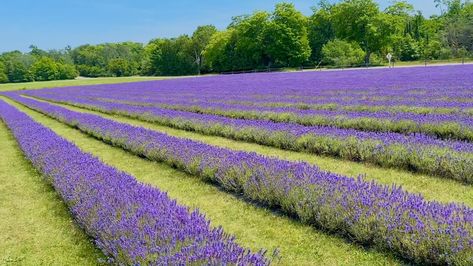
Commercial growers source wholesale lavender plants New Zealand from specialized nurseries that provide bulk quantities of oil producing varieties like Grosso. These suppliers offer flexible ordering options ranging from small batches to thousands of plants; ensuring consistent quality for large scale lavender farming and essential oil production.
Sourcing reliable wholesale lavender plants in New Zealand should be straightforward, but for many commercial growers it becomes a frustrating cycle of inconsistent stock, unclear variety specifications, and suppliers who simply cannot meet the scale required for serious production. Getting this foundational step wrong costs time, money, and entire growing seasons. New Zealand's lavender industry is expanding rapidly, driven by strong demand for essential oil, dried flower, and agritourism, which means the decisions you make at the procurement stage directly shape your farm's profitability for years ahead. In this guide, you will learn which varieties perform best in New Zealand conditions, how to calculate your per-hectare requirements, and exactly what to look for when choosing a wholesale lavender supplier capable of supporting genuine commercial scale.
TL;DR: Sourcing Wholesale Lavender Plants in New Zealand
Plantgroup New Zealand supplies wholesale lavender plants in bulk to commercial growers nationwide, covering everything from small starter lots to large-scale planting programs. Grosso (a lavandin hybrid) is the dominant commercial variety across NZ farms, accounting for around 80 percent of global lavender oil production and forming the backbone of most local operations. Depending on the variety, commercial plantings require 6,000 to 10,000 plants per hectare, typically supplied as 5cm tube stock at competitive wholesale pricing. You can browse our lavender range and place orders directly through our online platform.
Why New Zealand Commercial Lavender Farming Is Growing
New Zealand now has around four dozen commercial lavender farms operating across both islands, with most growers connected through the NZ Lavender Growers Association. That figure has grown steadily as operators recognise a genuine market opportunity that larger producing nations cannot easily replicate.
The core advantage is climatic. NZ's combination of high UV intensity, free-draining soils, and distinct seasonal temperature variation produces lavender oil with a chemical profile that commands niche premiums in international markets. Buyers in Europe, Japan, and North America pay more for verified NZ-origin oil precisely because the volume is limited and the quality is consistent. That dynamic rewards growers who invest in the right varieties from the outset.
Beyond oil, NZ farms are diversifying into dried flower bunches, value-added retail products, and agritourism, each with different variety requirements and harvest timing. This broadening of end markets means new entrants are not simply chasing commodity oil prices but building multi-revenue operations.
The practical consequence of this industry expansion is straightforward: demand for reliable wholesale lavender plants in New Zealand is increasing, and the cost of getting variety selection or plant quality wrong at establishment is significant. Sourcing bulk stock from a supplier with consistent commercial volumes becomes a foundational decision, not an afterthought.
Which Lavender Varieties Are Best for Commercial Production in NZ
Variety selection is one of the most consequential decisions in establishing a commercial lavender operation, and it starts with understanding the fundamental botanical divide between true lavenders and lavandins.
True lavenders (Lavandula angustifolia) grow at higher altitudes in their native range and produce a finer, more complex oil with lower camphor content. Mailette is the benchmark here, widely used by perfumers and aromatherapy producers who pay a premium for its chemical profile. Avice Hill and Hidcote also sit in this category. True lavenders tend to be smaller, slower-growing plants suited to premium oil niches or decorative agritourism plantings where visual detail matters more than volume.
Lavandins (Lavandula x intermedia) are sterile hybrids of true lavender and spike lavender. They grow larger, produce more flower material per plant, and tolerate mechanical harvesting better than their true lavender counterparts. Grosso is the defining example. It accounts for around 80 percent of global lavender oil production and is the primary commercial variety across most NZ farms, including operations running 100,000 plants or more. The trade-off is a higher camphor content compared to Mailette, which places the oil in a slightly different market tier, but the yield advantage is substantial and the demand is consistent.
For NZ growers building a commercial program, the choice of variety should map directly to the intended end market:
Oil distillation at volume: Grosso is the practical default, with Mailette as a premium supplement for growers targeting specialist buyers.
Dried flower bunches: Violet Intrigue, Pacific Blue, and Impress Purple offer strong visual appeal and stem length suited to commercial bouquet production.
Agritourism and display: Hidcote and Avice Hill provide the classic lavender aesthetic that photographs well and draws visitors across a longer bloom window.
Many established NZ farms grow a mix across all three categories, using Grosso as the revenue foundation while smaller blocks of specialty varieties diversify income streams and reduce harvest-period risk.
How Many Lavender Plants Do You Need Per Hectare in NZ
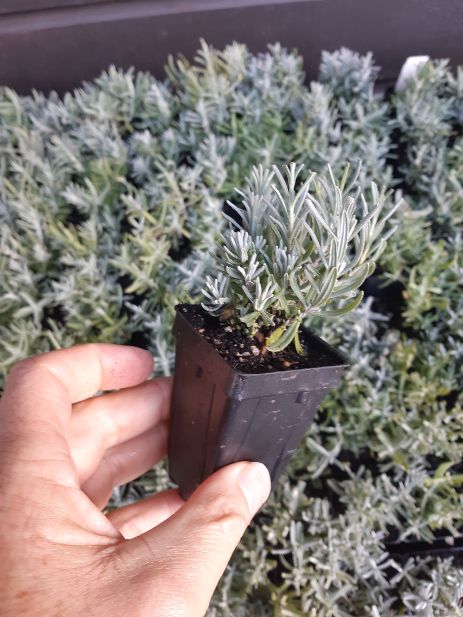
Knowing your variety shapes everything that follows, including how many plants you actually need to order. Commercial NZ lavender farms require 6,000 to 10,000 plants per hectare depending on the variety, and that range is wide enough to make a significant difference to your establishment budget.
Lavandins like Grosso grow vigorously and are typically planted at wider spacings: around 1.5m between rows and 1m between plants, which puts you toward the lower end of that density range at roughly 6,000 to 7,000 plants per hectare. True lavenders such as Mailette and Hidcote are smaller-growing and can be planted closer, with rows as tight as 1.2m apart and 0.8m between plants, pushing density toward 8,000 to 10,000 plants per hectare. Tighter spacing also suits operations prioritising visual density for agritourism.
To put this in practical terms: a 2-hectare starter farm will require somewhere between 12,000 and 20,000 plants before a single cutting is made. At those volumes, the difference between retail and wholesale pricing is not marginal. Plants supplied as 5cm tube stock through a wholesale supplier are priced at a fraction of retail equivalent, and that gap compounds quickly at commercial scale.
This is where sourcing wholesale lavender plants in New Zealand through a supplier equipped to handle large orders becomes a foundational cost decision, not just a convenience. Securing the full volume you need, at consistent quality, from a single reliable source removes a significant variable from what is already a capital-intensive establishment phase.
What to Look for When Buying Wholesale Lavender Plants in Bulk

Once you have your planting density calculated and your variety shortlist confirmed, the next decision is where to source that volume and what to verify before committing to an order. At commercial scale, plant quality and supplier reliability are not minor considerations; they are directly tied to harvest outcomes years down the track.
The first thing to check is propagation method. Lavender plants grown from cuttings are genetically identical to the parent plant, which means every Grosso in your paddock will have the same oil profile, the same growth habit, and the same harvest timing. Seed-grown plants introduce variability that is acceptable in a home garden but a genuine commercial risk. A block of inconsistent plants produces inconsistent oil yields and uneven flower uniformity, both of which affect what you can charge and who will buy from you.
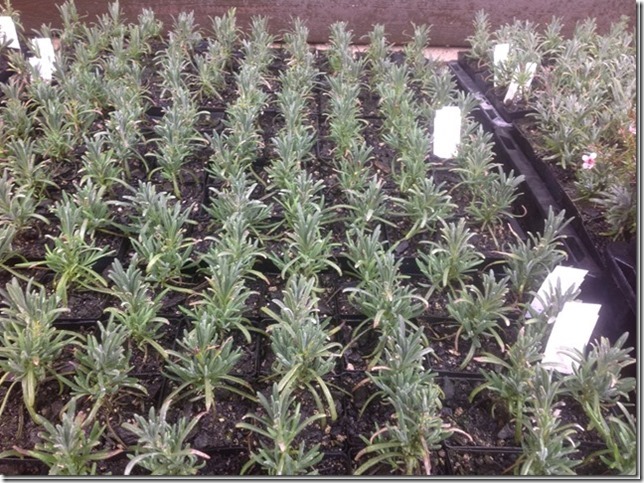
Beyond propagation, inspect what you are actually receiving. Tube stock supplied in 5cm containers should have a well-developed root system that holds the growing medium intact when removed, with no signs of root rot, disease, or waterlogging. Pale, leggy growth above the soil line usually indicates poor light conditions during propagation.
On the supplier side, ask practical questions: Can they fulfil your total volume in one consignment, or can they stage deliveries across your planting window? Do they have a track record with commercial-scale orders, not just retail quantities? Plantgroup NZ has been supplying lavender in bulk across New Zealand for 23 years, which means consistent stock availability and the capacity to support both single large orders and phased establishment programs across multiple seasons.
Grosso Lavender: The Commercial Grower's Workhorse
The supplier reliability question raised in the previous section becomes especially pointed when you are buying a single variety at scale, and for most NZ commercial operations, that variety is Grosso.
Grosso is a lavandin hybrid (Lavandula x intermedia) and the dominant commercial lavender variety not just in New Zealand but globally, accounting for around 80 percent of worldwide lavender oil production. That market position exists for concrete reasons. Grosso produces more essential oil per kilogram of dry matter than any other variety, making it the most efficient option for growers selling into distillation channels. Its vigorous growth habit generates substantial flower volume per plant, and the plant's structure tolerates mechanical harvesting well, which is critical at any scale beyond a few hundred metres of row.
The NZ harvest window for Grosso runs late January to early February, giving growers a defined target to build their season around. Yield, timing, and mechanical compatibility all align in a way that no true lavender variety can match at volume.
On pricing, Grosso lavandin oil sits below true lavender oil like Mailette on a per-litre basis due to its higher camphor content. Growers working with specialist buyers should understand that distinction clearly. The commercial answer is volume: Grosso compensates through yield, and most established NZ operations treat it as their revenue foundation while smaller blocks of true lavender serve premium or niche buyers.
For dried flower bunches destined for export or retail, Grosso also performs well, producing long stems and dense flower heads that bundle efficiently.
Plantgroup NZ supplies Grosso in bulk lots suited to commercial planting programs, with stock available as 5cm tube stock at wholesale pricing. You can browse our lavender range to check current availability across varieties and volumes.
Planning Your Planting Timeline and Ordering Schedule
Knowing your Grosso blocks will be the revenue engine of your operation is one thing; having 15,000 tube stock arrive at the right moment in the NZ seasonal calendar is another entirely.
Commercial lavender establishment in New Zealand works around two viable planting windows. Autumn planting, from March through May, allows root systems to establish during cooler months before plants face their first summer. Spring planting, from September through October, suits regions with colder winters where young tube stock risks frost damage if planted too late in the season. For most Marlborough, Canterbury, and Central Otago operations, autumn is preferred. Hawke's Bay and Northland growers often have more flexibility, but spring planting still requires stock to be in the ground before soil temperatures climb and establishment stress increases.
The ordering timeline is where most new growers miscalculate. Wholesale lavender suppliers propagate to forecast, not to spot demand, so placing an order six to eight weeks before you want to plant is rarely sufficient at commercial volumes. A phased farm establishment across two or three seasons is practical and common, but each phase requires its own forward order with adequate lead time.
Plantgroup NZ ships nationwide, so growers across Marlborough, Central Otago, Canterbury, Hawke's Bay, and Northland all access the same stock. See nationwide delivery and freight options for specifics on how orders are freighted to your region.
How to Order Wholesale Lavender Plants from Plantgroup New Zealand
Once your order schedule is mapped and you know your planting windows, the practical question is straightforward: how do you actually place the order?
Plantgroup NZ operates an online ordering platform where commercial buyers can browse our lavender range, check current stock across varieties, and place orders directly. Grosso is available in bulk lots suited to commercial planting programs, and stock is supplied as 5cm tube stock at wholesale pricing. For buyers needing smaller initial lots to establish a first block before scaling, through to operators ordering tens of thousands of plants across a phased program, the platform accommodates that range.
For enquiries involving custom volumes, specific variety combinations, or staged deliveries across a season, contacting the team directly is the practical route. With 23 years of experience supplying wholesale lavender plants across New Zealand, Plantgroup NZ has the context to work through commercial-scale requirements that go beyond a standard online order.
Trade account holders receive access to discounted pricing, which at commercial plant volumes makes a material difference to establishment costs. You can apply for a trade wholesale account to access those rates before placing your first order.
Establishing a successful commercial lavender farm in New Zealand requires careful planning; from soil preparation to selecting varieties that thrive in our unique climate. By focusing on high-quality stock and sustainable practices, you can ensure your rows remain vibrant and productive for years to come. If you find yourself needing expert guidance on selecting the best species for your site, explore our range of Plants to see how we can support your vision. Our team is here to help you cultivate a flourishing landscape that meets your specific commercial goals.